The MBA Essay Mistake You Don't Know You're Making
Yes, I’ve heard of that mythical MBA candidate who wrote her entire essay in one inspired sitting. Yes, I know it was the notoriously difficult “What matter most to you and why essay?”, the one that takes most MBA hopefuls months to get right. Yet for that one MBA candidate, the flow came at the snap of her fingers and never left, all the way to the mic drop conclusion, the Stanford GSB interview, and the fateful phone call from the AdCom telling her she’s in.
If you are that kind of MBA candidate, the one who writes effortlessly and knows exactly what to say and how to say it, I need you to exit this article right here. It’s not for you. It’s for the rest of us mere mortals who find inspiration to often be fickle and writing to require a lot more effort than we suspected at the onset. And to you, I say: take heart. Help is on the way. Let’s begin with one simple truth.
Simple truth #1: Writing great MBA essays isn’t supposed to be easy
You’re asked to be authentic but not overshare.
You’re asked to be vulnerable but not cross into cringe territory.
You’re asked to share your failures but not make them the entire point.
You’re asked to celebrate your achievements but not come across as arrogant.
You’re asked to tell a compelling story but also fit it within 500 words.
You’re asked to connect emotionally but stay professional.
You’re asked to highlight your uniqueness but without being gimmicky.
You’re asked to stand out but also demonstrate that you’ll fit in.
It can feel like you are being asked to do the impossible... distill years of experience, ambition, and growth into a few hundred words while hoping the admissions committee connects with it, remembers it, and wants more of it.
Anxiety tells you to include everything about yourself. Every career achievement, every skill, every defining moment, just in case you leave something important out.
But MBA essay word limits are getting shorter and shorter. There’s no space for everything. That’s not what the admissions committees want anyway. Your job isn’t to tell your entire life story. It’s to tell the right story, the one that makes them understand who you are, what drives you, and why you belong in their program.
So where do you begin?
Simple truth #2: The enemy is trying to make every word perfect right out of the gate.
I came across a great graphic by the entrepreneur Janis Ozolins (you can check out his work here, it’s pretty neat) and I asked him nicely to give me permission to use it here. He said yes.
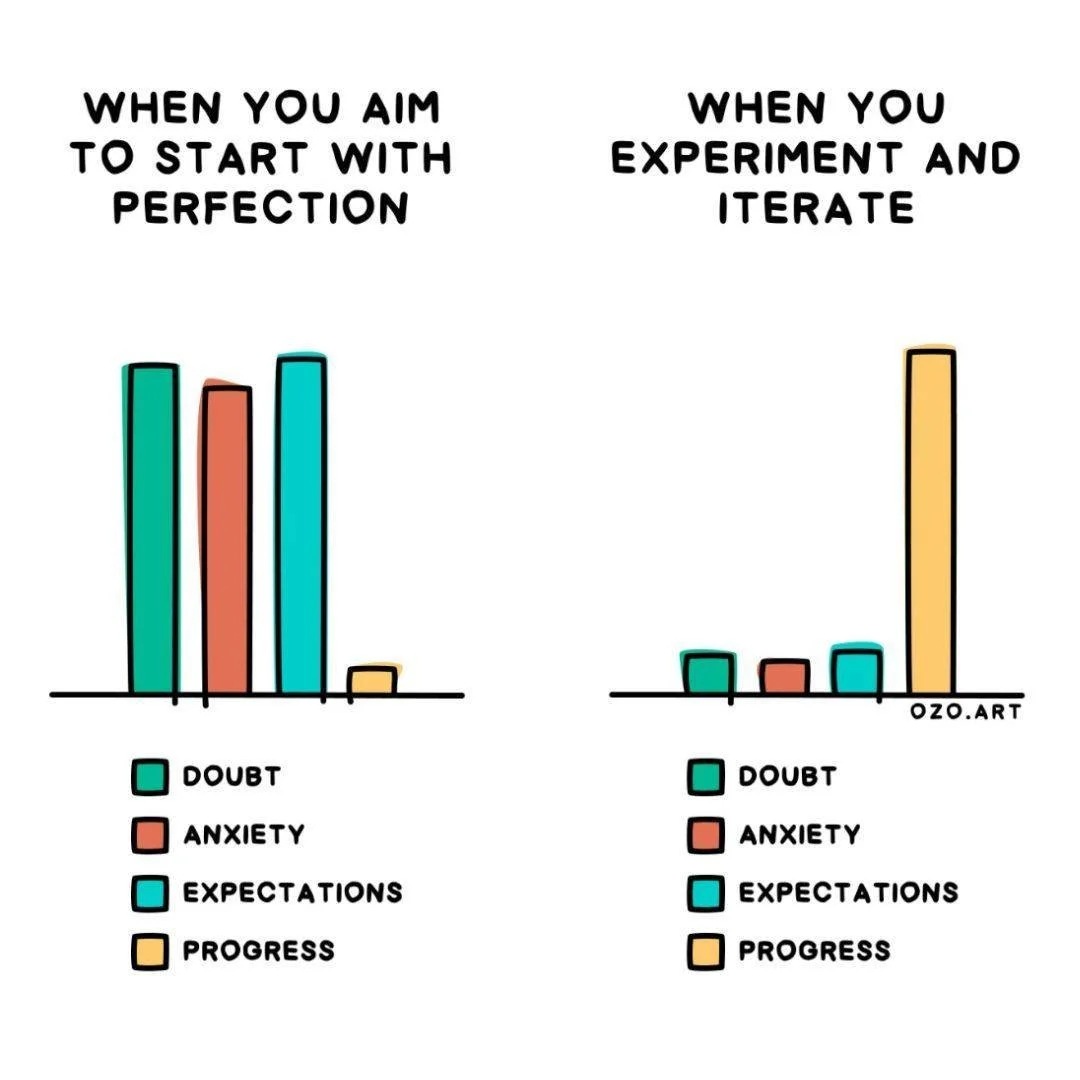
Aiming for perfection amplifies doubt, anxiety, and expectations, suffocating progress. But when you begin with experimentation and iteration, progress soars.
And that’s the idea I want you to hold onto as you tackle your essays.
Simple truth #3: Progress beats perfection every time.
One of my MBA candidates shared this insight about his first draft process:
"My goal was just to get something onto paper. I didn’t really care what it was. I’m a big believer that writing improves clarity. I’ve also found that it’s a good way to build momentum, because I know I can get caught up in thinking too much, and going in circles in my head without any real progress."
Take it from someone who’s been in your shoes: the act of writing creates clarity. Your first draft doesn’t need to be polished. It just needs to exist.
Simple truth # 4: Next, Get Closer
Some time ago, I saw a powerful exhibit at the Virginia Museum of Fine Arts: "American, born Hungary: Kertesz, Capa, and the Hungarian American Photographic Legacy."
Robert Capa, a man considered by some to be the greatest combat and adventure photographer in history, is known for capturing humanity in its rawest moments. His images don’t just document stories; they make you believe you are inside the story.
A quote from him is something I often think of when I work on my own writing or help MBA candidates with theirs:
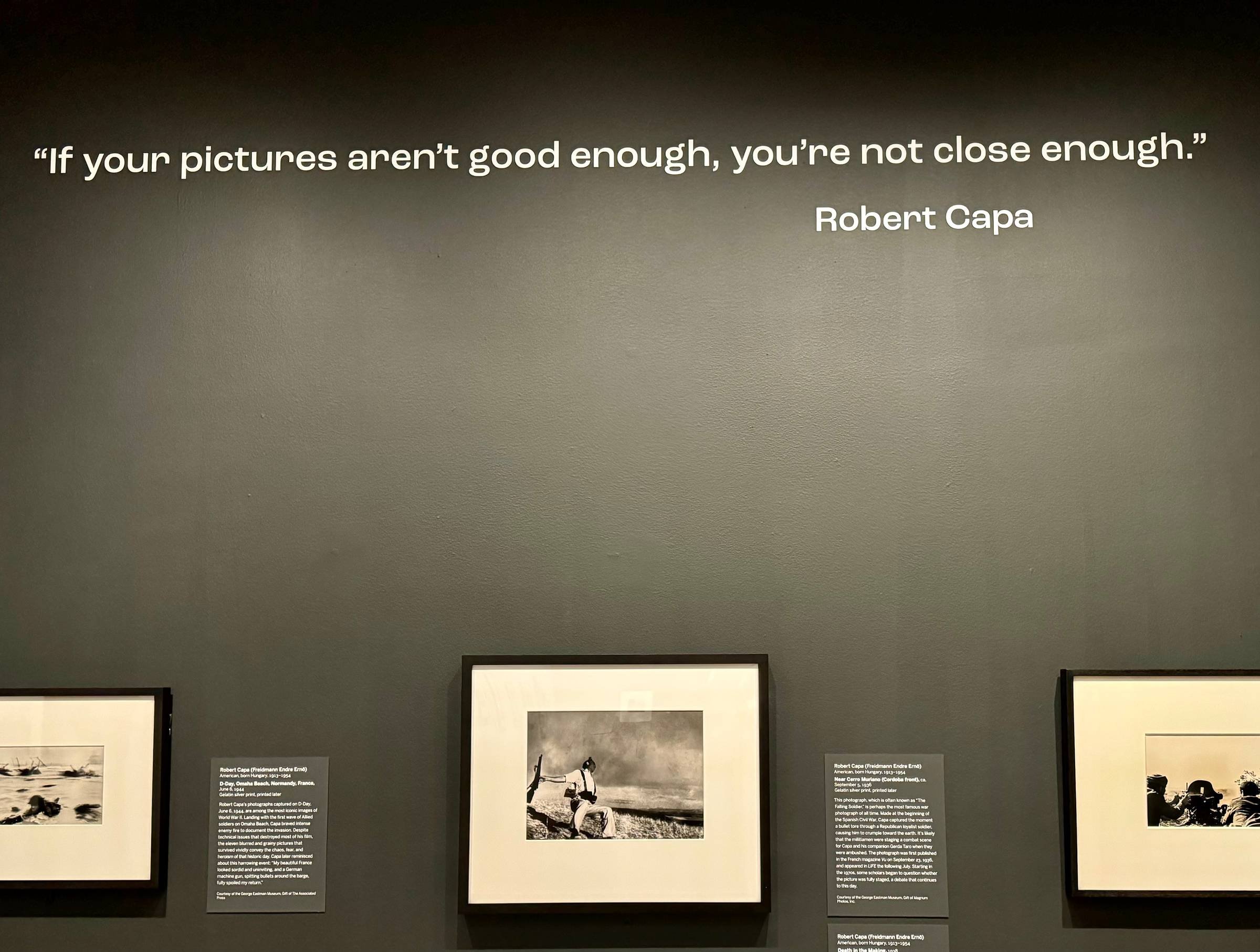
"If your pictures aren't good enough, you're not close enough." Doesn't it feel like an insight you could use?
Get closer to your motivations. Closer to the “what, why, and how” of your actions. It’s not enough to show the MBA admissions committee what you’ve done. They want to understand why you’ve done it, how it worked out, and what it reveals about your potential.
Ask yourself:
When I made that career pivot, what was I willing to risk or give up, and why did it feel worth it?
What was the moment I truly realized how real life leadership differs from the definitions in the self-improvement books?
How has my journey actually prepared me for what's next and shown me the gaps that need closing?
The depth of your answers matters more than the polish of your delivery. Get close enough that it feels raw and real because that’s where the rare, powerful stories are born.
Onwards and upwards,
Petia
Related articles: